

Here's the Hero's Journey for reference with summary run-downs of how the stages apply to story. I originally posted this to refute some confusion of how the model is used to understand universal story tropes. Some literary theorists are FAR too literal and don't get that some of Campbell's references are themselves metaphors or generalizations.
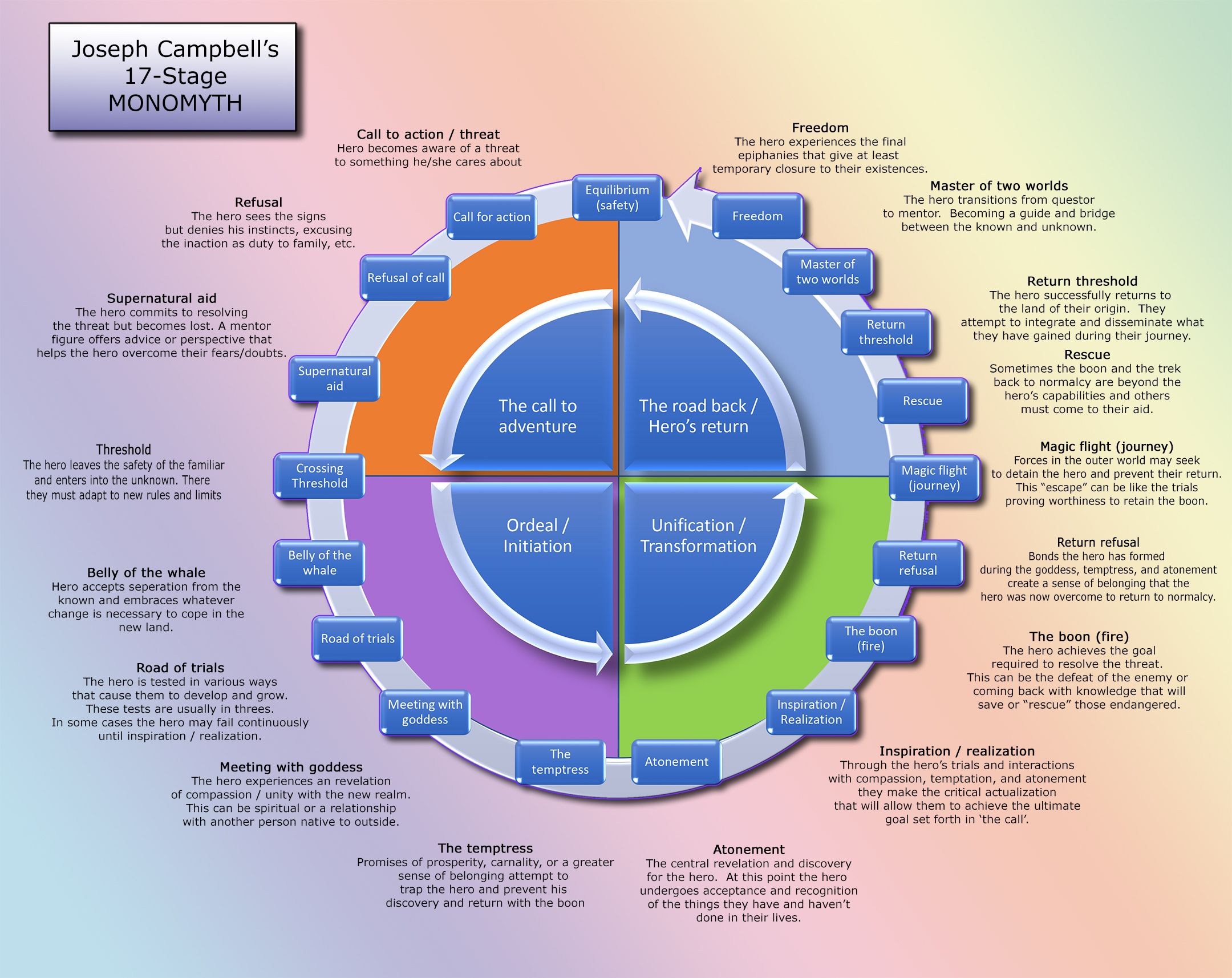
Journey stages
- Call to action
Almost all stories will have the "call to action".
- Refusal
This is the reluctant hero trope.
- Supernatural aide
It's called supernatural, but it really applies to any figure the hero respects that give them the necessary push to start their journey.
So, right here, these 3 stages are in many stories. Let's go further, see what else applies generally to stories.
- Threshold
It's when the hero transitions from their familiar surroundings to something new. This could be enrolling in a new school for a young protagonist, going in the military, moving to a new state. Any new location that will be a source of challenges for the hero. This can be metaphorically applied to a vast number of situations, examples being: a new job, joining a team, or a rags to riches new lifestyle.
- Belly of the whale
this is where the hero goes through some adaptation to cope with the new environment.
- Road of Trials
Or tests ... these are difficulties the hero must overcome to achieve balance in the new situation.
- Meeting with the Goddess
(don't take the goddess or the gender literally) This is just a person native to the new place who the hero becomes intertwined with. This can be just friendship or intimacy. The key thing is this person becomes an anchor to the hero that makes them not want to leave.
- The temptress
this can be a separate figure to the goddess or another more seductive lure. The temptress is metaphorical. It can be as mundane as a good job or a really enjoyable pastime the hero did not have in their previous life. This can also be the friend and/or lover trying to persuade the hero to stay.
- Atonement
this is a fulcrum in the story... the balance between the current life and the previous life. Not all stories have or need this reflective moment. This is a kind of lessons learned realization the hero has in regards to their new situation.
- Inspiration / realization
if the reason for the journey was a problem to be solved in the hero's previous circumstances. This is the stage where everything they've attained gels and they realize what they must do in order to fix the issue.
- The boon
this is the macguffin. In mythology, this is the discovery of fire that will change the lives of men. For star wars, "The Force" was the boon. This can be anything that will help the hero in climax (lose or win).
- Return Refusal
Because of the anchors and temptations in the new environment the hero must struggle and/or justify their return to the previous circumstance. Note: Some stories stop here. The hero STAYS. It depends on the type of story.
- Magic flight (journey)
this is similar to the return refusal this can be more nefarious forces in the story try to prevent the hero from leaving the new world or prevent access to the previous world.
- Rescue
The hero gets stuck, side tracked or must overcome trails in order to get back to their previous circumstances. They may receive a help from allies from the new or former lives to continue their journey. In Star Wars, this is when Han comes at the last minute and disables Darth Vader's ship allowing Luke to continue to destroy the Death Star.
- Return Threshold
The final deed is done, and the story climax is passed / failed. Master of two worlds and Freedom are denouement related aspects of the story. These are wrap ups and new status as the victorious or failed hero.
- Master of two worlds
The hero has new status knowing both the new and old knowledge.
- Freedom
These are the final status epiphanies and balance in the story. So, unlike what other people say... you can easily have 8 - 10 stages in the model. Especially if you look at the stages in a generic way.