

Step 0 - Decide if you are going to invest a bunch of time into writing a story. Books take (on average) about 1000 hours. A typical short story of around 3000 words will take anywhere from 20 to 50 hours of work to develop and polish. Experience matters. I have a certain someone in my writing group who will come up with a premise and bang out the thing in 5 or 6 hours over a couple days. Step 1 - Create the characters OR alternatively develop the overarching premise (see below) NOTE: Characters are the product of their world. The point of creating the characters is lost if you don't understand the world and contention that will give them PURPOSE. Making Characters Stand Out Developing Characters -- Milieu + Character synthesis Step 1A - Alternative premise generation
Step 2 - Integration - No matter which order you do them in... you need to merge the characters and plot premise. Knowing the character's stakes allows you to create a premise where a contention threatens those stakes. Before you implement anything, each of the three world elements must have at least some nebulous form in your mind. Step 3 - planning - if you are a pantser (discovery writer) you just start with discovery. (If you want to have more nuanced plot notes - skip ahead to step 3A. For discovery, you STILL need to come up with a scene that will be your inciting event. IMPORTANT: Give consideration to whether your inciting event needs a run-up or setup.
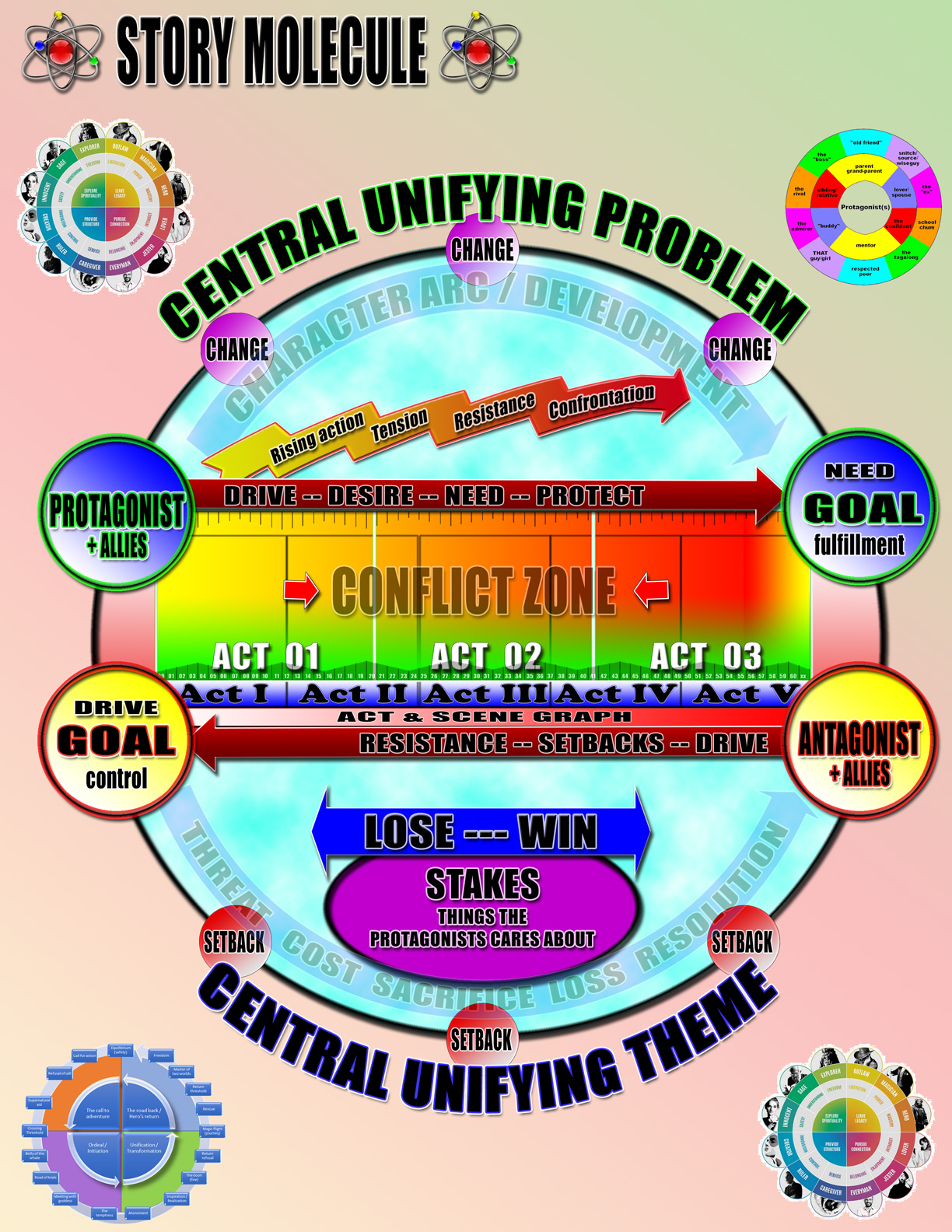
By this, does the reader have everything they need to be hooked by your inciting event? The questions to ask yourself are :
- Does the reader know the protagonist well enough to care? (Relation / empathy)
- Does the reader know enough to understand the stakes? (Involvement / context)
- Does the reader feel some engagement? (Promises of being entertained) Depending on the nature of the stakes and the kind of contention, all of these things CAN be satisfied WITHIN the inciting event. So, the writer has to take into account his/her crafting skills and judge how much setup / run-up is needed to support that critical scene. The inciting event is the scene where the characters have some catalyzing change in their world that encourages or forces them to take action. In the Hero's Journey, this is the "call to action". As a part of the discovery process, you need some nebulous idea of where you are going. Here are some posts to help you with that all-important foundational introduction. Dynamic Beginnings (1 of 2) Dynamic Beginnings (2 of 2) Step 3A - planning - If you need a net ... then you have to figure out the general scope of the story. A novel is anywhere from 20 to 100 scenes (60-ish being the sweet spot). Short stories are roughly one scene per two-thousand words. The critical understanding about scene development is PROGRESSION what does this depicted event advance in terms of plot, world, or character?
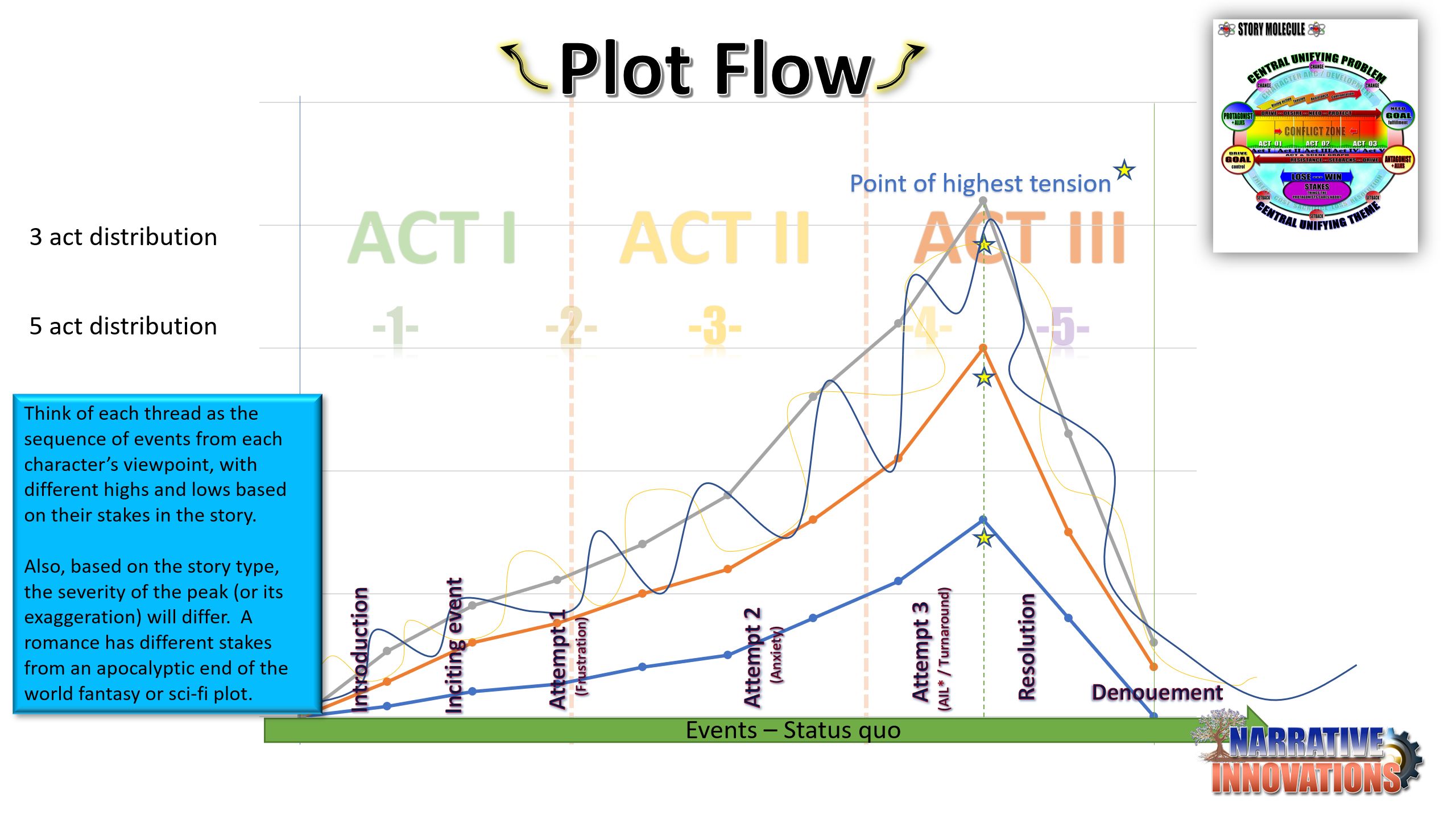
Your end goal is to solve the story contention. Whatever is required to do that must be setup across all the scenes that follow the inciting event. These will vary based on the type of contention being resolved. In revenge fight stories, for instance, the protagonist has to find "strength (tm)" to defeat the end antagonist. In romance, they have to navigate whatever romantic blockers that exist. In general, story is about setting all the flags to establish the win / lose condition at the end.
Here's an example of super-detailed scene story boarding: NOTE: Story boards CAN get more detailed than this, but in my experience the more detail you put in, the more wasted energy is lost due to you coming up with a new idea somewhere in the middle of the implementation. Step 4 - Implementation - SCENES. You should concentrate on IMMERSION. Put your reader in your world, seeing that world through your characters. Viewpoint - Taking Another Look Try and follow good standards for technique. The Five 'V's of Strong Narrative Great Dialogue Writing the "Feels" - Physical / Emotional Registers Beyond Villains -- Addressing Antagonists in Detail Good luck.
Popular Articles in this Space