

Writing tends to be a solo thing because of its limited appeal, time requirements, and tough gratification cycle. A pencil or digital artist can draw something and easily get feedback on the aesthetic of their creation. Getting much more than a 'that's nice' response from peers and family members is a frustrating reality for most writers. There's simply no getting around the fact that any skill needs iteration. It needs doing. More, you need guidance to help you see how to improve.
Art aesthetics are fairly intuitive... a pleasing curve or color. Prose is a whole other thing ... language is abstract, and what appeals to one person may not be pleasing at all to another. That's the thing. Commercial writing i.e. writing to entertain hinges on *broad appeal. One can argue on what constitutes "broad" but we can probably agree that it needs to be something significantly more than one in every hundred people. This is the aspect where a writing group adds particular value along with these others:
- Writers are USUALLY readers, and BECAUSE they are writers they can generally communicate WHY something doesn't work for them.
- Most groups are eclectic in terms gender, age, education, and culture ...
this means you can gauge who the material successfully targets and who you are turning off.
- Peerage - having people who are ALSO interested in writing... isn't it frustrating not having someone you can correspond with or talk to about writing-related stuff?
- Support - I cannot undersell how much it helps to have people encouraging you to be successful. More, because of the group's regimen, it validates your creative work. The group can be tough on you, and challenge you to get better - and that's what you need to help you build confidence and self-reliance. GROUP MECHANICS I won't say I have the best group, but it's pretty darn okay! Over the years, there's been a fair amount of turnover, but that's because there's work, time management, and inspiration to contend with. Every two weeks, on Saturdays, we have a 4+ hour long meeting where project submissions are discussed. In the time between meetings, authors submit work for the others to review. With eight members, this can create as much as 50k words of reading and review. This is really tough as more than one of us works full time at a 9 to
- So, we often beg for some restraint... like keeping submissions closer to 3500 words or shorter. Group work is saved in a shared google docs folder so that the submissions are platform (Mac, PC, or linux) agnostic. Reviewing is done per each writer's own comfort. Submission reviews are usually private... though they can be public.
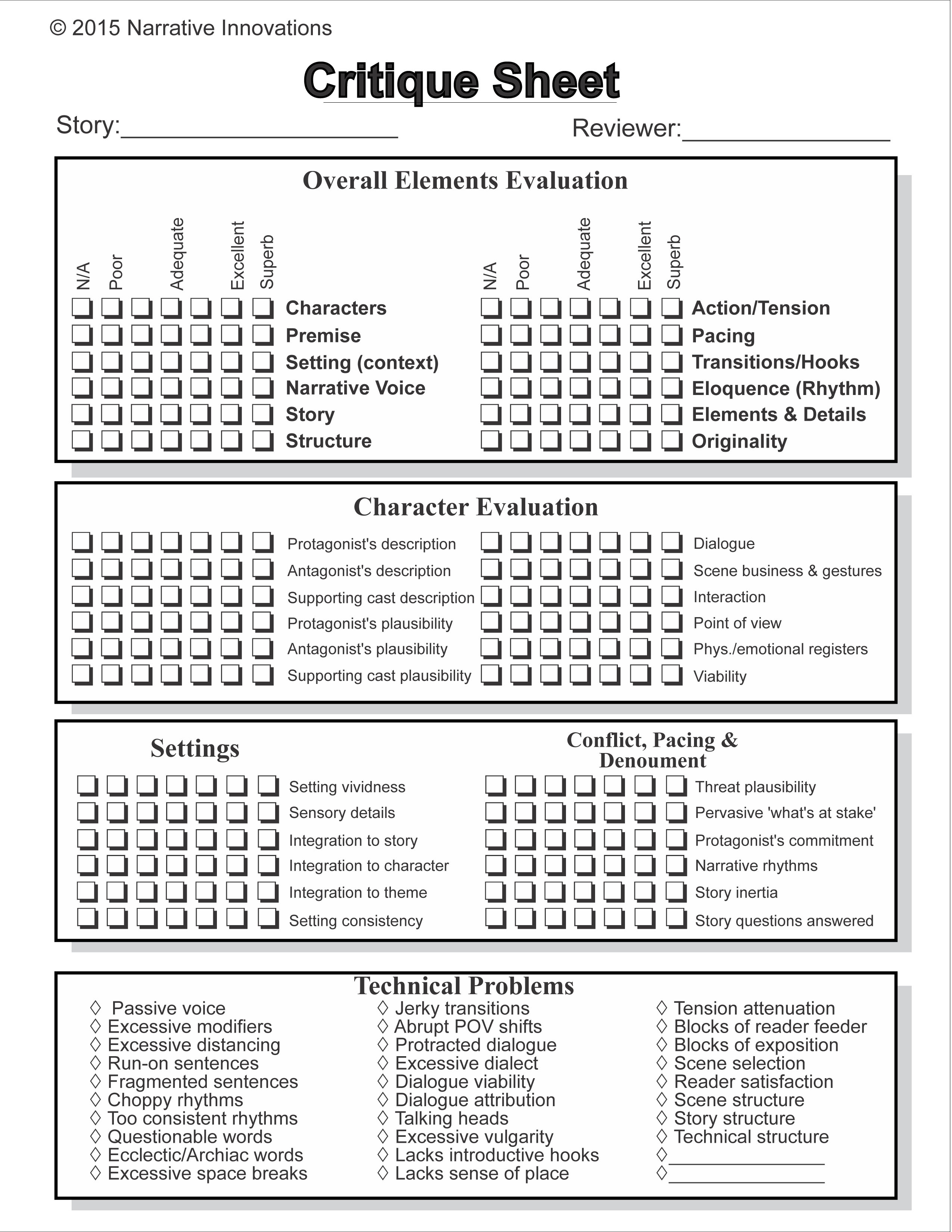
Sometimes there's value in looking at other reviews when trying to provide a review... (Am I the only one triggered by this...???). I would like to point out that learning to review is learning to EDIT. For people who think quid pro quo edits is a waste of time... it is NOT ... thinking critically is vital to your growth as a writer. What applies to others OFTEN applies to you. This also takes the form of learning to be constructive and helpful.
Just pointing out a problem is like 20% of the feedback. Offering alternatives and suggestions is the monstrous value add. IDEAS, concepts, different ways of thinking ... this creative exchange is what makes the members stick with it. It's not blind iteration, you can self-guide by using the feedback intelligently. Finding a good group isn't easy, but once you're in one, and getting good feedback- it's a rewarding experience. What is a multilayered narrative?
Can you give an example of it?